 Marcus Bramwell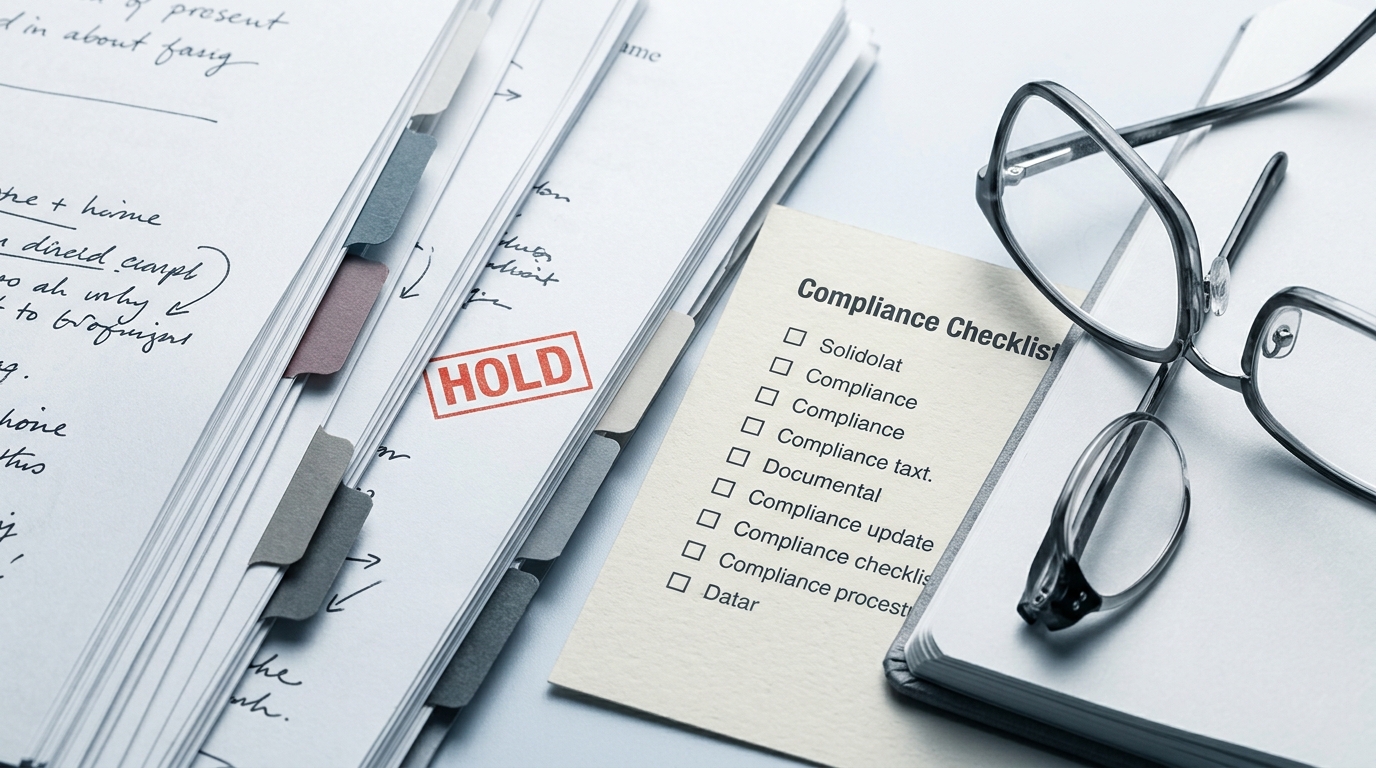
Why Most Social Media Approval Workflows Fail Compliance Officers
A social media approval workflow built for compliance does one thing above all else: it creates an auditable, sequential gate between content creation and publication that no post can bypass. In regulated B2B environments, finance, healthcare, and legal marketing teams need more than a quick manager sign-off. They need documented evidence that the right people reviewed the right content before it reached a public channel.
The gap between what most marketing teams run and what compliance officers actually require is wider than it looks. Many teams operate informal approval processes: a Slack message, a shared Google Doc, a verbal confirmation. These work fine for low-stakes consumer brands. They are genuinely inadequate for a registered investment adviser, a hospital system, or a law firm where a single post can trigger a regulatory inquiry.
For a broader view of the structural risks that arise when posting processes lack controls, the piece on the hidden risks of fully automated social posting in regulated industries <a href="/blog/the-hidden-risks-of-fully-automated-social-posting-in-regulated-industries">The Hidden Risks of Fully Automated Social Posting in Regulated Industries</a> is worth reading before you design your queue.
What Compliance Officers Actually Need From an Approval Queue
Compliance officers are not trying to slow down marketing. They are trying to satisfy specific, external obligations: record-keeping rules, disclosure requirements, and the ability to produce evidence during an audit or examination.
A workflow that satisfies those needs has four concrete properties. First, it assigns review responsibility to named roles, not just teams. Second, it timestamps every action, from draft creation through each approval stage to publication. Third, it retains a copy of the approved content as it was actually published, not a later edited version. Fourth, it creates a rejection trail: if a post was flagged and revised, the record shows what changed and why.

Put your brand voice on autopilot
FlyingToast learns your brand voice and generates on-brand social posts across 12 platforms. Start free, no credit card.
Informal workflows fail on all four counts. A Slack thread does not reliably timestamp approvals. A shared document does not record who approved what version. Email chains get deleted. The approval queue, in a compliance context, is not a productivity tool. It is a control.

How to Structure a Social Media Approval Workflow for Compliance
The right structure depends on the regulatory environment, but a common pattern in enterprise content operations is a three-stage queue: creator, reviewer, and approver. Each stage has a distinct function and a distinct accountability.
Stage 1: Creator. The person drafting the post is responsible for accuracy, disclosure language, and adherence to brand guidelines. In regulated industries, this stage should include a pre-submission checklist, covering required disclosures, prohibited claims, and image compliance. Our guide to building a brand voice style guide that actually gets used by marketing teams <a href="/blog/building-a-brand-voice-style-guide-that-actually-gets-used-by-marketing-teams">Building a Brand Voice Style Guide That Actually Gets Used by Marketing Teams</a> covers how to make those standards actionable rather than aspirational.
Stage 2: Reviewer. This is typically a senior marketer or content lead who checks for brand voice consistency, factual accuracy, and completeness of disclosures. The reviewer is not a compliance officer. Their job is to catch problems before the post reaches the compliance stage, reducing the volume of rejections and the time compliance spends on avoidable issues.
Stage 3: Approver. In regulated industries, this role belongs to a designated compliance reviewer, sometimes a Chief Compliance Officer, a legal counsel, or a registered principal depending on the regulatory framework. This person is not editing for tone. They are confirming that the post meets the firm's regulatory obligations and can be published and archived.
Some organizations add a fourth stage for legal review when posts touch litigation-sensitive topics, product claims, or pending regulatory matters. That is a judgment call based on risk tolerance, not a universal requirement.
Why Sequential Stages Matter More Than Parallel Review
A common shortcut is to send content to multiple reviewers simultaneously, collecting approvals in parallel to save time. In a compliance context, this creates a problem: parallel review does not establish a clear chain of custody, and it can produce conflicting feedback that the creator resolves informally, outside the documented record.
Sequential review means each stage sees the version that was approved by the previous stage. If a compliance officer approves a post, they are approving the exact text that the reviewer signed off on. If marketing then edits the post after compliance approval, that edit breaks the chain. The compliance record no longer reflects what was published.
This is not a theoretical concern. Many B2B marketing teams that have gone through regulatory examinations report that examiners ask specifically whether the published content matches the approved content. Sequential, version-controlled workflows make that question easy to answer.
The article on building an AI content approval workflow step by step <a href="/blog/building-an-ai-content-approval-workflow-a-step-by-step-framework-for-marketing-">Building an AI Content Approval Workflow: A Step-by-Step Framework for Marketing Teams</a> covers how to implement version control within an approval process, which is particularly relevant when AI is generating draft content at volume.
What Disclosure Requirements Mean for Queue Design
Disclosure obligations vary by industry, but the design implication is consistent: disclosures cannot be treated as optional fields that creators remember to add. They need to be enforced at the queue level.
In financial services, FINRA and SEC rules require that certain communications include specific risk disclosures, performance caveats, or registration information. In healthcare, FTC and FDA guidance governs claims about treatments and outcomes. In legal, bar association rules restrict specific types of client solicitation and testimonial language.
The practical implication for queue design is that the pre-submission checklist at Stage 1 should be mandatory, not advisory. A creator should not be able to submit a post for review without confirming that required disclosures are present. Some platforms support this through required fields or conditional logic. Others require teams to enforce it through process documentation and training.
Disclosure language also needs to survive platform formatting. A disclosure that wraps awkwardly on mobile or gets truncated by a platform's character limit is not a compliant disclosure. That is worth testing explicitly before you publish, and it connects to the broader challenge of managing per-platform variants, which the piece on multi-platform publishing without copy-paste <a href="/blog/multi-platform-publishing-without-copy-paste">One message, every platform: multi-platform publishing without the copy-paste</a> addresses in detail.
How AI-Generated Content Changes the Compliance Equation
AI-generated social content creates a specific governance challenge: volume. A team that previously produced ten posts a week might produce fifty with AI assistance. The approval queue that worked at ten posts per week will become a bottleneck at fifty, and compliance officers under time pressure will either slow everything down or start approving posts less carefully.
This is not a reason to avoid AI content generation. It is a reason to design the queue with volume in mind from the start.
Several patterns help. First, AI-generated drafts should go through the same sequential stages as human-written content, without exception. The source of the draft does not change the compliance obligation. Second, AI tools that learn brand voice from approved documents (brand guidelines, regulatory-approved marketing materials, legal-reviewed templates) can reduce the volume of compliance rejections at Stage 3 by producing drafts that are already closer to compliant. Our guide on how to train AI on your brand voice <a href="/blog/how-to-train-ai-on-your-brand-voice-a-corporate-marketers-playbook">How to Train AI on Your Brand Voice: A Corporate Marketer's Playbook</a> explains how that training process works in practice.
Third, autopilot publishing modes, where AI-generated content publishes without human review, are not appropriate for regulated industries. Full stop. The approval queue exists specifically to prevent that. For a clear-eyed comparison of autopilot and manual approval models, the article on AI autopilot vs. smart scheduling <a href="/blog/ai-autopilot-vs-smart-scheduling-which-automation-model-fits-your-corporate-team">AI Autopilot vs. Smart Scheduling: Which Automation Model Fits Your Corporate Team</a> lays out where each model is and is not appropriate.
For a broader treatment of governance controls around AI content, our piece on AI content governance for corporate marketing teams <a href="/blog/ai-content-governance-for-marketing-teams">AI content governance for corporate marketing teams</a> covers the policy and process layer beyond the approval queue itself.

Building a Brand-Safety Checklist That Survives Regulatory Scrutiny
A brand-safety checklist is the practical tool that makes the approval queue functional. Without it, reviewers are making subjective judgments. With it, they are applying documented standards that can be shown to an examiner.
A checklist for regulated B2B social content typically covers six areas. Required disclosures: are they present, accurate, and legible on all target platforms? Prohibited claims: does the post make any performance guarantees, superlatives, or comparative claims that the regulatory framework restricts? Image compliance: does the image contain any claims or representations that require separate review? Audience targeting: is the content appropriate for the platform's audience, including any restrictions on marketing to retail versus institutional audiences? Archiving confirmation: is the post configured to be captured by the firm's archiving solution before publication? And version integrity: is this the exact version that was reviewed and approved at each prior stage?
The brand safety guardrails article <a href="/blog/brand-safety-guardrails-for-ai-generated-content-what-marketers-need-to-know">Brand Safety Guardrails for AI-Generated Content: What Marketers Need to Know</a> goes deeper on how to build these standards into an AI content workflow specifically, which is increasingly relevant as more regulated-industry teams adopt AI generation tools.
Who Should Own the Approval Queue Process
Ownership of the queue design and the queue process belongs in two places: marketing operations owns the workflow mechanics, and compliance owns the standards the workflow enforces. These are distinct responsibilities, and conflating them creates accountability gaps.
Marketing operations is responsible for ensuring the queue functions correctly: that stages are sequential, that timestamps are captured, that version history is preserved, and that the archiving integration is active. Compliance is responsible for defining what constitutes an approvable post: what disclosures are required, what claims are prohibited, and what the rejection criteria are.
The question of who reviews AI-generated content specifically is worth addressing explicitly in your governance documentation. Our article on who should review AI-generated marketing content before publishing <a href="/blog/who-should-review-ai-generated-marketing-content-before-publishing">Who Should Review AI-Generated Marketing Content Before Publishing?</a> covers how to assign that responsibility clearly, including how to handle edge cases where AI output touches sensitive regulatory territory.
For teams building out a complete B2B social media program, the complete guide to B2B social media marketing <a href="/blog/the-complete-guide-to-b2b-social-media-marketing">The complete guide to B2B social media marketing</a> provides the broader strategic context in which compliance controls sit.
Archiving Is Not Optional: What the Queue Needs to Capture
Many marketing teams treat archiving as an IT problem and assume it is handled. In practice, archiving gaps are one of the most common compliance failures in regulated-industry social media programs.
Regulators in financial services, for example, require that electronic communications, including social media posts, be retained for defined periods (commonly three to seven years depending on the rule and the communication type) and be retrievable in a reasonable time frame. The approval queue needs to be connected to an archiving solution that captures the post as published, not just the draft as approved.
This means the queue workflow should include a confirmation step: before a post is scheduled, the system or the operator confirms that archiving is active for that platform and that account. If archiving is not confirmed, the post should not be scheduled. That is a hard control, not a soft recommendation.
The connection between the approval queue and the archiving solution also needs to be tested periodically. Many teams discover archiving gaps only when they need to produce records, which is the worst possible time.
Key Takeaways for Marketing Operations Teams
A compliant social media approval workflow is not more complex than it needs to be. It is sequential, documented, version-controlled, and connected to archiving. Every post passes through defined stages with named accountabilities. No post bypasses the queue, including AI-generated content. Disclosures are enforced at submission, not left to creator memory. And the workflow produces a record that can survive an audit.
The investment in building this correctly is front-loaded. Teams that design the queue well spend less time on regulatory remediation, fewer cycles on rejected posts, and less time reconstructing records when examiners ask questions. The compliance officer who signs off on your queue design is not your adversary. They are the person who keeps your firm out of an enforcement action, and a well-designed workflow makes their job easier, not harder.