 Marcus Bramwell
Social Media Archiving Requirements for Financial Services: A Compliance Checklist
Financial services firms are required to capture, store, and produce records of all business-related social media communications, under rules enforced by the SEC, FINRA, and their state-level equivalents. Social media archiving for financial services compliance is not optional or aspirational. It is a legal obligation with documented enforcement consequences, and marketing teams that treat it as an IT problem rather than an operational one tend to discover the gap at the worst possible moment.
This checklist covers what you need to archive, how long you need to keep it, where approval workflows fit into the compliance picture, and what operational patterns separate firms that pass examinations from those that scramble through them. For context on the broader automation risks that accompany these requirements, the hidden risks of fully automated social posting in regulated industries <a href="/blog/the-hidden-risks-of-fully-automated-social-posting-in-regulated-industries">The Hidden Risks of Fully Automated Social Posting in Regulated Industries</a> is worth reading alongside this piece.
What "Archiving" Actually Means Under Financial Services Rules
Archiving in this context means more than saving a screenshot. Regulators require that records be captured in a non-rewritable, non-erasable format, indexed for retrieval, and preserved for defined retention periods.
FINRA Rule 4511 requires member firms to preserve books and records in a format consistent with SEC Rule 17a-4. That rule specifies WORM (Write Once, Read Many) storage or an equivalent electronic system with audit controls. A folder of PDFs on a shared drive does not satisfy this standard.
The practical implication: any social media post made in connection with a securities business is a "communication with the public" and falls under these rules. That includes posts on LinkedIn, X (Twitter), Facebook, and any other platform where the firm or its registered representatives communicate about products, services, or market commentary.

Put your brand voice on autopilot
FlyingToast learns your brand voice and generates on-brand social posts across 12 platforms. Start free, no credit card.
Which Content Types Trigger Archiving Obligations
Not every social interaction carries the same compliance weight, but the threshold for what counts as a "business communication" is lower than most marketing teams assume.
Content that triggers archiving obligations includes:
- Original posts promoting financial products, services, or the firm itself
- Responses to comments or direct messages that reference specific products or market conditions
- Reposts or shares where the firm adds commentary
- Posts by registered representatives on personal accounts when those posts relate to the firm's business
Content that may fall outside the requirement includes purely personal posts by employees that have no connection to the firm's business. However, many compliance officers advise treating ambiguous cases as covered rather than making judgment calls at the individual post level.
A common pattern in enterprise financial services marketing is to extend archiving to all accounts associated with the firm's domain or brand, regardless of whether a specific post looks promotional. That conservative posture reduces the risk of a gap appearing during an examination.
What the SEC and FINRA Retention Timelines Require
Financial services social media records retention periods depend on the type of record, not the platform it was published on.
Under SEC Rule 17a-4, broker-dealers must retain most business communications for three years, with the first two years in an easily accessible location. Some record categories, including certain customer account records, require six-year retention. Investment advisers operating under the Investment Advisers Act face similar requirements under Rule 204-2, which also mandates three-year retention for most communications records.
FINRA's own guidance does not create a separate retention period but reinforces that social media communications are subject to the same standards as other business correspondence.
The operational implication for marketing teams: your archiving system needs a retention schedule baked in, not managed manually. Posts published in 2024 need to be retrievable in 2027 without someone having to remember to keep them.
Why Approval Workflows Are a Compliance Control, Not Just a Brand Control
Pre-publication review of social media content functions as a compliance control in regulated financial services environments. Treating it as a pure brand-quality step misses its legal significance.
FINRA's rules on communications with the public require that certain content categories be reviewed by a registered principal before publication. Retail communications (content distributed to more than 25 retail investors) must be approved by a registered principal prior to first use. Correspondence and institutional communications have different but still defined review requirements.
An approval queue that routes content to a qualified reviewer before it publishes is not just good content governance. It is the mechanism by which the firm demonstrates that it met its pre-publication review obligation.
Our framework for building an AI content approval workflow <a href="/blog/building-an-ai-content-approval-workflow-a-step-by-step-framework-for-marketing-">Building an AI Content Approval Workflow: A Step-by-Step Framework for Marketing Teams</a> covers the structural elements in detail. The key compliance-specific addition is that approval records themselves need to be archived. Who approved a post, when, and under what role matters as much as the post content itself.

The Compliance Checklist: What Your Archiving System Must Cover
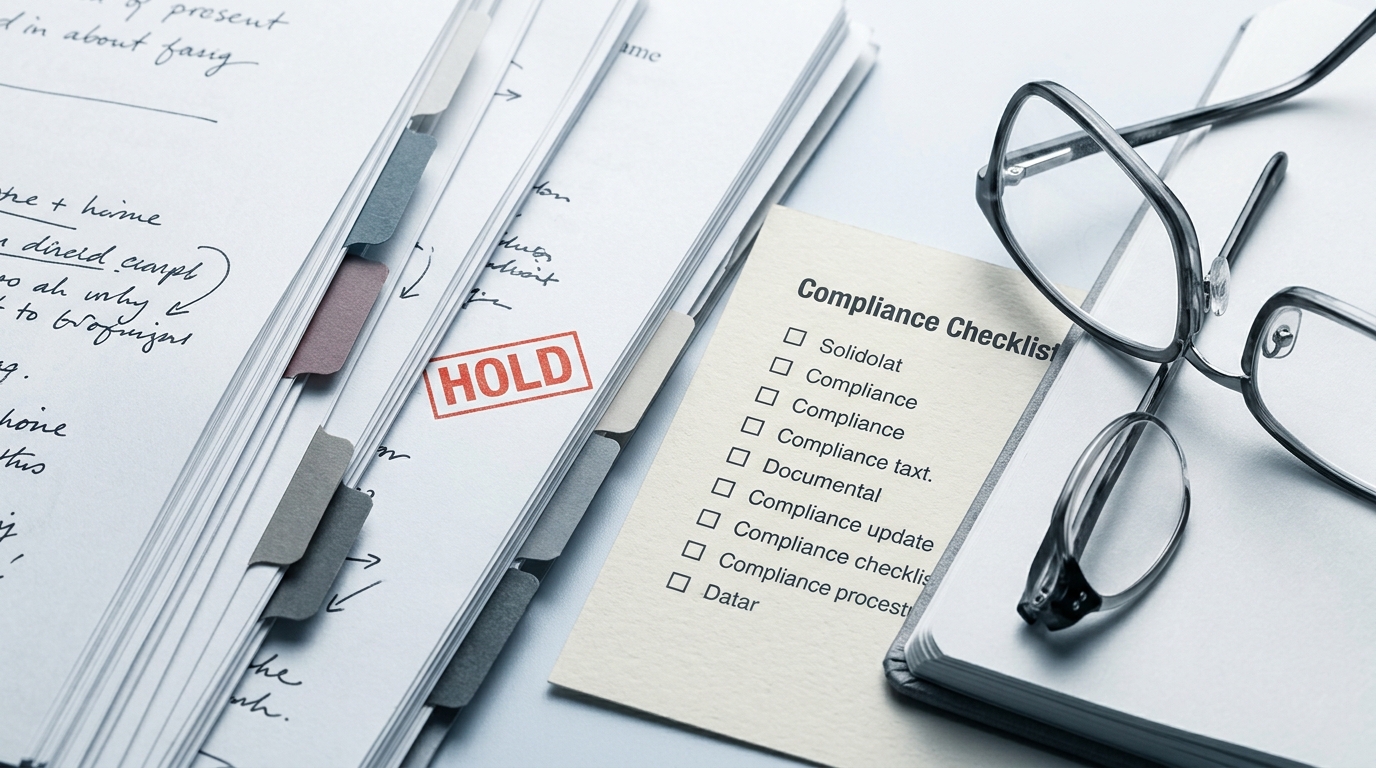
A functional social media archiving setup for a financial services firm covers six distinct requirements. Each one has a corresponding operational question your team should be able to answer.
1. Capture completeness Does your system capture all posts across all platforms where the firm or its representatives publish? Gaps in platform coverage are a common examination finding. If a registered representative is posting on LinkedIn and that account is not connected to your archiving system, the content is not captured.
2. Format integrity Are records stored in a non-alterable format? WORM-compliant storage or a certified electronic recordkeeping system is required. The archive cannot be one where records can be edited or deleted after the fact.
3. Metadata retention Does the archive capture the date, time, platform, account name, and publishing identity alongside the content? Regulators examining records will want to know not just what was posted but when and by whom.
4. Approval records Is the pre-publication review trail preserved? The name of the approver, their role, and the timestamp of approval should be linked to the corresponding content record.
5. Retrieval speed Can you produce specific records within a reasonable timeframe in response to an examination request? "Easily accessible" under SEC Rule 17a-4 has been interpreted to mean within a short time period. If retrieval requires a multi-day manual search, the system does not meet the standard.
6. Retention schedule enforcement Does the system automatically enforce retention periods, or does someone have to manually manage deletion and preservation? Manual retention management creates gaps. Automated enforcement, with documented policies, is the defensible approach.
For teams managing content at volume, understanding who should review AI-generated marketing content before publishing <a href="/blog/who-should-review-ai-generated-marketing-content-before-publishing">Who Should Review AI-Generated Marketing Content Before Publishing?</a> adds important context around role definitions in the review chain.
How AI-Generated Content Complicates the Archiving Picture
AI content generation does not change what must be archived, but it changes the volume and velocity of content that enters the archiving pipeline.
A firm that previously published five posts per week now has the operational capacity to publish across dozens of accounts at much higher frequency. Each of those posts carries the same archiving obligation as a manually written post. The compliance infrastructure needs to scale with the content output, not lag behind it.
A related concern is provenance. When content is AI-generated, the approval record needs to reflect that a qualified human reviewed the final output before publication. Autopilot modes, where content publishes without human review, are incompatible with FINRA's pre-publication review requirements for retail communications in most scenarios.
The guidance on brand safety guardrails for AI-generated content <a href="/blog/brand-safety-guardrails-for-ai-generated-content-what-marketers-need-to-know">Brand Safety Guardrails for AI-Generated Content: What Marketers Need to Know</a> addresses the content-quality dimension. The compliance dimension adds a layer: the human review step is not just a quality gate, it is a regulatory requirement that needs to be documented.
Marketing teams that automate brand voice often find that the governance question surfaces late in the implementation process. Building the approval and archiving workflow before scaling content output is significantly easier than retrofitting it.
Regulated Industry Content Preservation: What Examinations Actually Look For
FINRA and SEC examinations of social media practices tend to focus on a predictable set of questions. Understanding the examination pattern helps firms prioritize where to invest compliance effort.
Examiners typically ask for a sample of social media communications from a defined time period. They will compare what was published against what was archived to check for gaps. They will look at whether a registered principal approved retail communications before publication. They will check whether the firm has a written supervisory procedure (WSP) covering social media, and whether the actual practice matches what the WSP describes.
The most common gap is not in the archiving technology. It is in the written supervisory procedures. Many firms have archiving in place but their WSP does not specifically address social media, AI-generated content, or the approval chain for each content type. When the examination asks "show me your procedure," a gap between the written procedure and the actual workflow is a finding.
The complete guide to B2B social media marketing <a href="/blog/the-complete-guide-to-b2b-social-media-marketing">The complete guide to B2B social media marketing</a> covers the broader operational picture, but for regulated firms, the WSP alignment piece is where compliance and marketing operations need to work together explicitly.

Building the Operational Infrastructure: Practical Steps
The compliance requirement is clear. The operational challenge is building a workflow that satisfies it without creating a bottleneck that makes social media publishing impractical.
Connect every publishing account to your archiving system before the account publishes anything. Retroactive archiving is not possible for content that was never captured. The sequence matters: archiving connection first, then publication.
Define your approval chain in writing and match it to your WSP. Identify which content categories require registered principal review, who holds that qualification on your team, and what the escalation path is when that person is unavailable.
Audit your archive quarterly. Pull a random sample of posts from the previous quarter and verify they appear in the archive with complete metadata. Gaps found internally are far less costly than gaps found by an examiner.
Document your retention schedule. Write down what retention period applies to each content category, where records are stored, and who is responsible for confirming that retention policies are enforced. This document should live alongside your WSP.
Train your team on what counts as a business communication. Registered representatives who manage personal social accounts need to understand that posts about the firm's products or services are subject to the same rules as posts from the firm's official accounts. The guidance on employee advocacy programs <a href="/blog/building-an-employee-advocacy-program-that-doesnt-feel-inauthentic-a-strategists">Building an Employee Advocacy Program That Doesn't Feel Inauthentic: A Strategist's Playbook</a> covers the broader program design, but compliance training is a prerequisite for any firm in a regulated industry.
For teams using AI to generate content at scale, the AI content governance for corporate marketing teams <a href="/blog/ai-content-governance-for-marketing-teams">AI content governance for corporate marketing teams</a> framework provides a structured approach to maintaining oversight as output volume grows.
How to Evaluate Whether Your Current Setup Is Examination-Ready
Most marketing teams do not know the answer to this question until they are asked it under pressure. Running a self-audit before an examination is a straightforward way to identify gaps while there is still time to close them.
Ask your archiving vendor or IT team to produce a complete export of all social media records from the past 90 days. Review the export for: completeness across all accounts and platforms, presence of metadata (date, time, platform, account, publisher identity), and linkage to approval records where applicable.
If any of those elements are missing, you have identified the gap. The question then is whether the gap is a technology problem, a workflow problem, or a documentation problem. Each has a different fix.
Technology gaps require vendor or integration changes. Workflow gaps require process redesign and retraining. Documentation gaps require updating the WSP and related policies. Many firms discover they have all three, which is why the self-audit is worth doing well in advance of any examination cycle.
Understanding how measuring social media ROI for B2B marketing teams <a href="/blog/measuring-social-media-roi-b2b">Measuring social media ROI for B2B marketing teams</a> connects to your content operations can also surface gaps in how posts are tracked and attributed, which overlaps with the metadata completeness question in archiving.
Key Takeaways
Social media archiving for financial services compliance is a defined legal obligation, not a best practice. The core requirements are WORM-format storage, complete metadata capture, pre-publication approval records, defined retention schedules, and documented supervisory procedures.
AI-generated content does not reduce the archiving obligation. It increases the volume of content subject to that obligation and makes the human review step more important, not less.
The most common examination findings are not technology failures. They are gaps between written procedures and actual workflows. Closing that gap, by auditing your practice against your WSP and updating both where they diverge, is the single highest-value compliance action most financial services marketing teams can take.
For teams building or refining their content governance framework, the discussion of who should approve AI-generated content <a href="/blog/who-should-review-ai-generated-marketing-content-before-publishing">Who Should Review AI-Generated Marketing Content Before Publishing?</a> and the brand voice governance guidance <a href="/blog/building-a-brand-voice-style-guide-that-actually-gets-used-by-marketing-teams">Building a Brand Voice Style Guide That Actually Gets Used by Marketing Teams</a> both address the human oversight structures that compliance in regulated industries depends on.