 Justin van Oel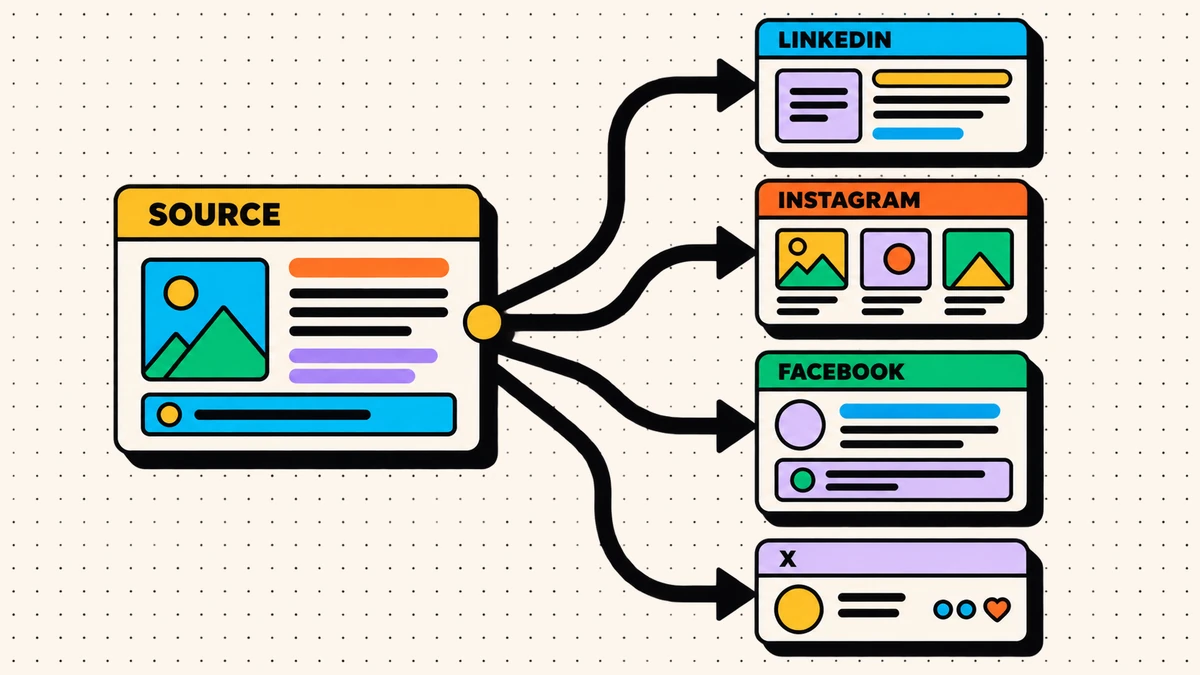
Multi-platform publishing means carrying one approved source message into multiple social channels from one workflow, then adapting each draft to its destination. The practical benefit is a single source of truth with fewer copy-paste steps. The right channel mix still depends on where the intended audience is active and which connected destinations support the required workflow.
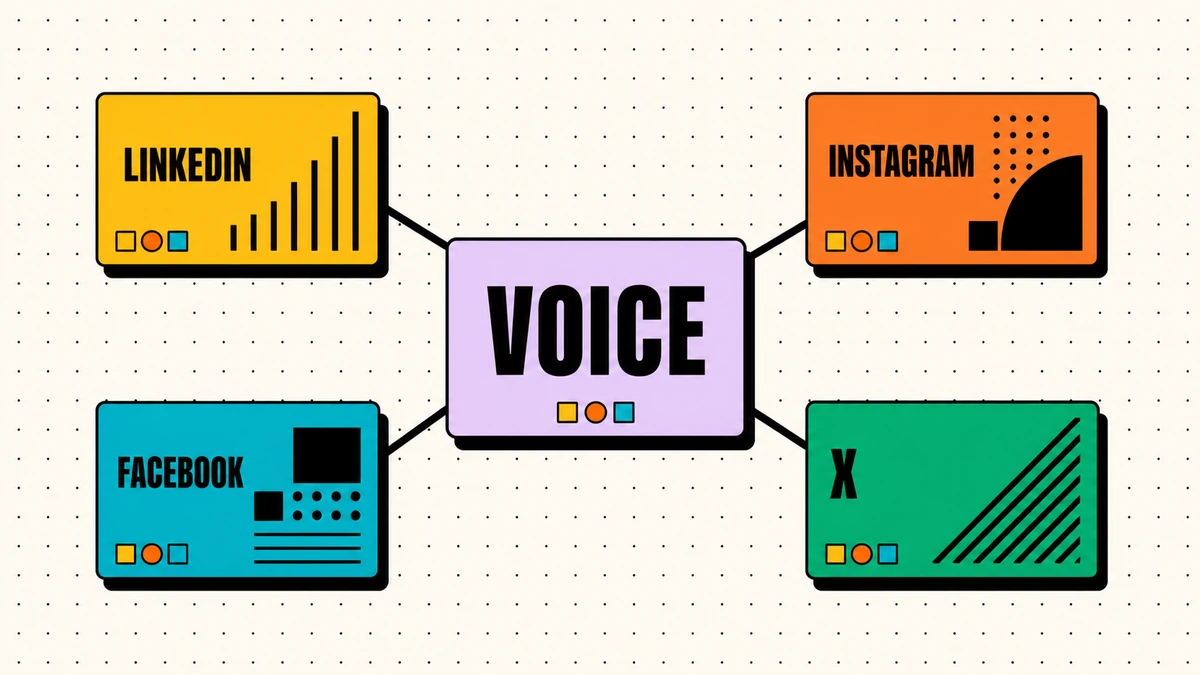
When channels are owned in isolation, product facts, voice decisions, and campaign timing can drift. A shared source and review process makes those differences visible without forcing every destination to use identical copy. The content calendar guide covers a lightweight operating rhythm for that work.
The goal is one source of truth, many outputs. Think of it as the Source-of-Truth model: one core message, owned in one place, adapted into platform-native variants rather than copied. Everything else in this article is about how to get there.
Why copy-paste cross-posting weakens destination fit
Copy-pasting the same text across platforms can ignore destination-specific constraints, audience expectations, and media formats. The same source message may need a different opening, length, next step, or visual treatment. Adaptation should preserve the supported claim while making the draft usable in its destination.
FlyingToast uses “platform drift” here to describe a source message changing materially as different contributors adapt it. Compare variants against the same current source and voice rules so differences in tone or format do not silently change the claim. The guide to keeping brand voice consistent across channels provides a review method.

Turn your brand context into social drafts
Turn your brand context into platform-aware social drafts for your connected channels. Start free, no credit card.
The fix is not writing better copy. The fix is changing where and how adaptation happens.
What platform-specific optimization actually requires
Platform-specific optimization does not mean writing an unrelated post for every destination. It means adapting format, length, opening, next step, and visual treatment while keeping the supported source message intact.
Use current destination constraints and first-party guidance when preparing a variant. Use only relevant hashtags where they add context or discovery value, and test framing and format against destination-level results. These are editorial decisions, not stable ranking rules.
The adaptation step is an operational risk: rushed variants can lose evidence, nuance, or the intended voice. Review the variant against both the source message and the destination requirement.
How social media scheduling fits into a multi-platform workflow
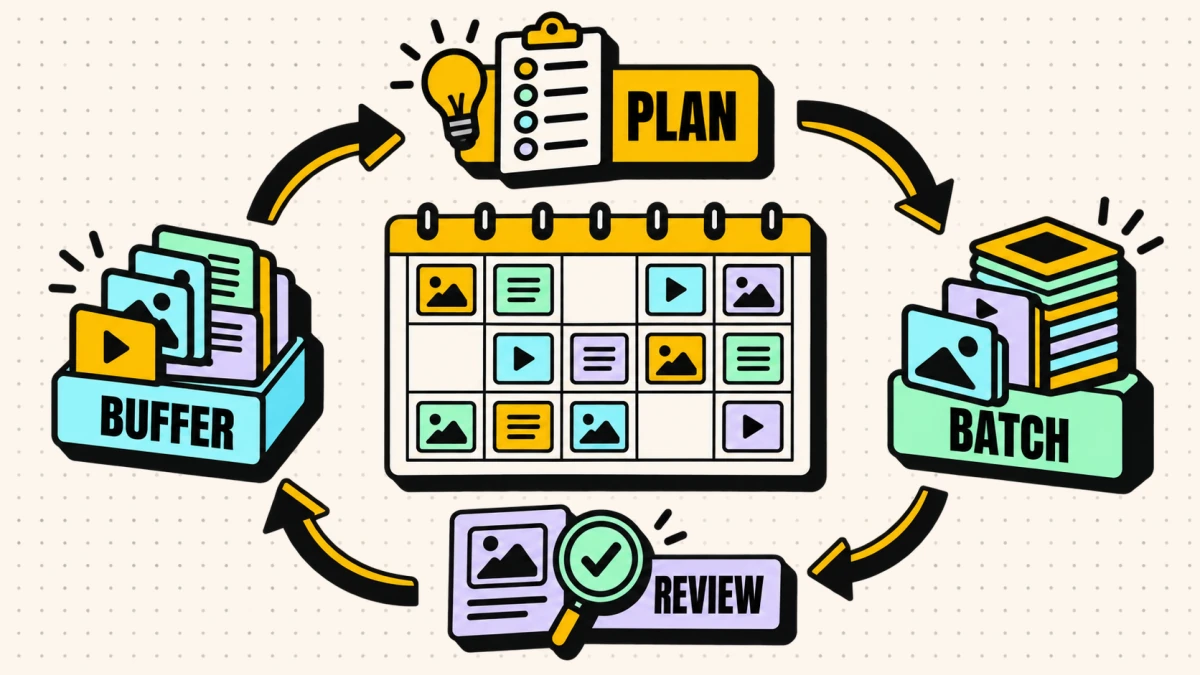
Social media scheduling is the operational layer that makes multi-platform publishing sustainable. Without it, you are publishing reactively, which means inconsistent cadence, missed windows, and content that goes out at suboptimal times.
The scheduling layer does three things. First, it separates content creation from content distribution, which lets your team work ahead. Second, it enforces a posting cadence that does not depend on someone remembering to hit publish. Third, it creates a visible calendar that makes gaps and overlaps obvious before they become problems.
Scheduling can reduce reactive coordination, but it does not automatically increase output or reduce workload. Measure planning time, edit effort, approval delay, failed publishes, and destination-level outcomes before deciding whether the workflow is more efficient.
Where a platform or tool provides audience-activity or suggested-time data, treat it as one scheduling input and test it against observed destination-level outcomes.
How AI changes the economics of multi-platform publishing
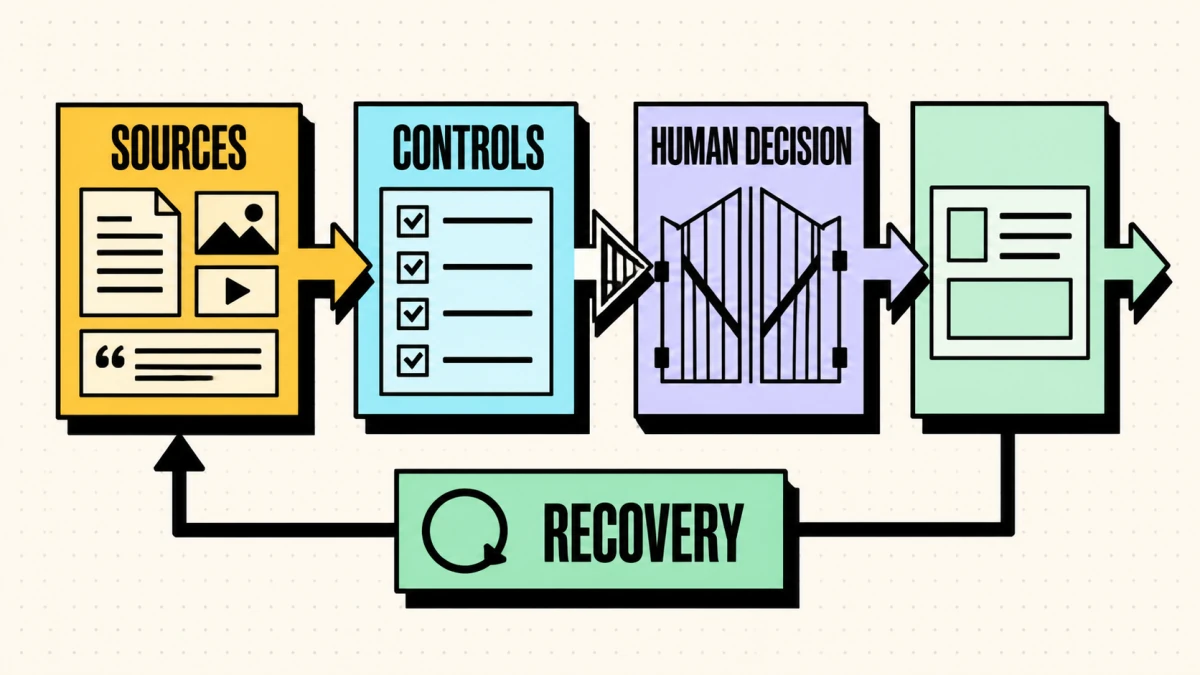
AI-assisted publishing can shift more effort from first drafting into review. A system may create destination variants from one source message, while a person verifies the claim, voice, media, next step, and publishing state.
When destination demand exceeds editorial capacity, AI assistance may reduce some first-draft work. Measure substantive edit effort, approval delay, failed publishes, and published quality before claiming an efficiency gain.
Brand context is one important input. Reviewed documents, selected website content, examples, and explicit voice rules can give generation a more specific basis than a generic prompt. Test edit effort and voice fit rather than assuming that source context guarantees either. AI content governance explains how sources and review ownership fit into the wider control system.
One honest trade-off: AI-generated content at scale can create a homogenization risk if no human editorial layer exists. Autopilot modes are efficient. They are not a replacement for periodic human review of what is actually going out.
What an approval workflow needs to handle at scale
An approval workflow for multi-platform publishing needs to handle volume without creating a bottleneck that defeats the purpose of automation. The two failure modes are equally common: no approval process (content goes out unreviewed) and an approval process so heavy that posts sit in queue until they are no longer timely.
The practical middle ground is a tiered approach that matches scrutiny to risk:
| Content type | Sensitivity | Approval path |
|---|---|---|
| Evergreen, routine | Low | Lightweight single-reviewer queue |
| Campaign, launch, regulated | High | Structured sign-off |
| Time-sensitive, reactive | Medium | Expedited path that still includes brand review |
This follows the proportionate-control principle described in the AI content governance guide: match evidence, review, and recovery requirements to the specific risk rather than relying on a format label.
Approval design can become the limiting step when ownership is unclear or every draft follows the same route. Define content classes, accountable owners, evidence needs, and escalation paths before scaling the workflow.
How to evaluate multi-platform publishing tools without getting lost in feature lists
The feature lists for social media automation platforms are long and often misleading. Every tool claims to do everything. The practical evaluation comes down to four questions.
Does it use reviewable brand context, and can you correct that context? Inspect which sources, examples, and voice rules the system uses. A generic prompt and an inspectable source-context workflow are different operating models, but neither guarantees voice fit.
How does it handle per-platform variants? Some tools publish identical content everywhere. Others generate platform-specific variants automatically. Know which you are buying.
What does the approval workflow look like at your team size? A workflow designed for a solo creator will create friction for a team of eight. Test with your actual review process, not a simplified version.
What happens when image generation fails? This is a practical reliability question. Some platforms will hold the post. Others will publish without the image and let you decide. Neither is wrong, but you need to know which behavior to expect.
The FlyingToast homepage summarizes the current workflow and product posture, while the pricing page lists current flat plans, channel allowances, and generation quotas.
The operational setup that makes multi-platform publishing stick
The technology is the easier part. The harder part is the operational setup that keeps the workflow running after the initial launch energy fades.
Start with a channel audit. List every active platform, who owns it, what the posting cadence is, and what content types perform there. The audit may reveal channels without a current owner, defined purpose, reliable cadence, or measurable contribution.
Next, define your content types. Thought leadership posts, product announcements, event promotion, and industry commentary each have different adaptation requirements. Documenting those requirements once means the AI (or the writer) is not reinventing the approach every time.
Then build the calendar structure before you fill it. A shared content calendar that shows supported destinations in one view gives contributors a common coordination point. The guide on building a content calendar that runs itself is a practical reference for that setup step.
Finally, define a review cycle aligned with campaign, product, and destination changes. Inspect what published, what required substantive edits, which outcomes were observed, and where the workflow blocked.
The consistent thread across supported channels
Multi-platform publishing is easier to evaluate when the workflow preserves supported claims, makes destination adaptations explicit, and assigns review according to risk. Define those decisions before increasing automation. Multi-platform publishing is one discipline within a broader B2B social media marketing strategy, and it rewards the same patience.
The copy-paste era is over. The question is whether your workflow reflects that yet.
Method note
Destination conventions and product capabilities change. Verify current first-party platform guidance and supported workflow behavior when implementing this process.